
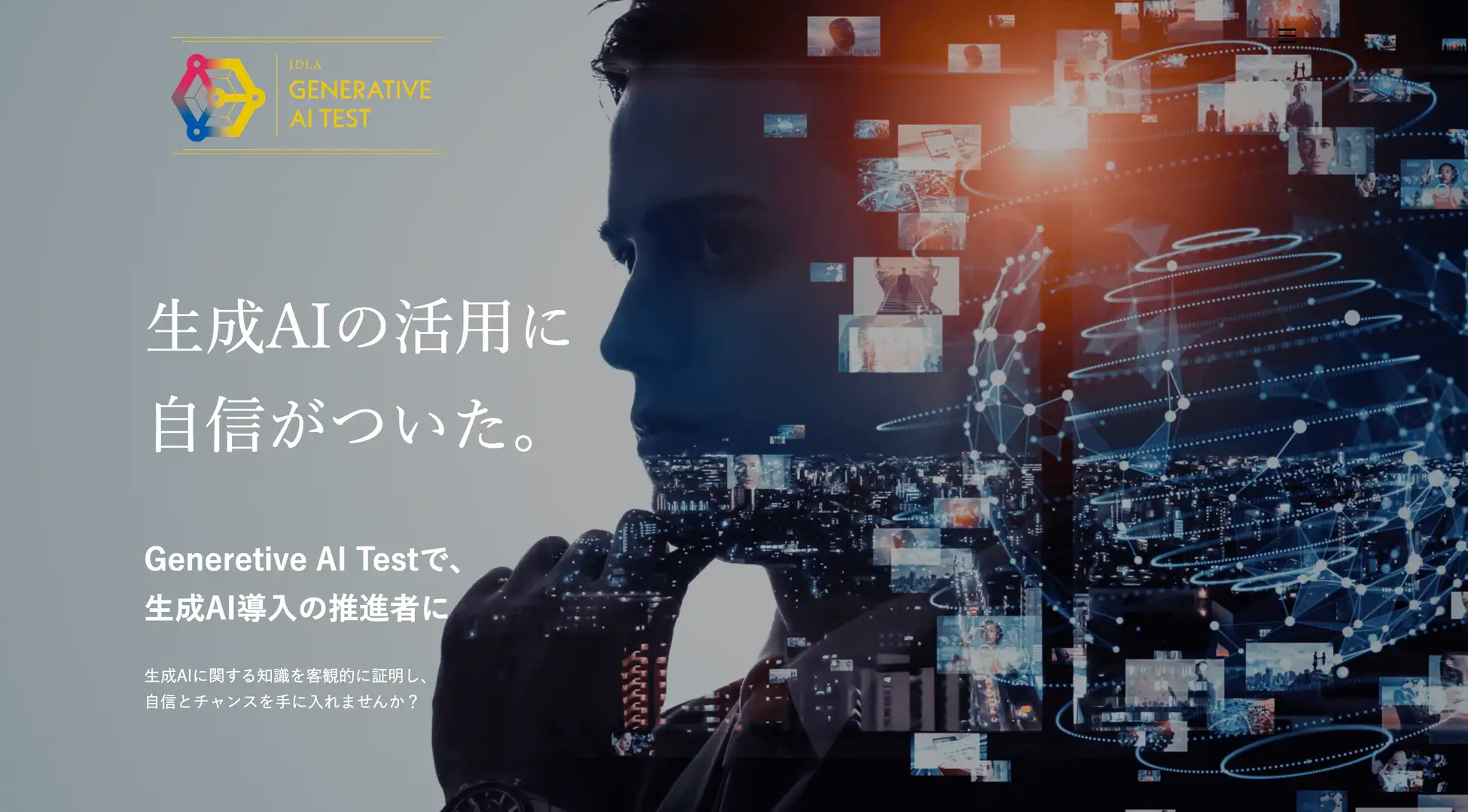
The Japan Deep Learning Association (JDLA) administers the JDLA Generative AI Test, designed to confirm knowledge and literacy specific to generative AI.
Registration for JDLA Generative AI Test 2023 #2, the second installment in 2023, opened on October 16.
Wakabayashi (Representative Director & CEO) and Inoue (CTO) of Elith Inc., which has a track record of development using generative AI, are taking part in the question-setting project for this test.
[About the Generative AI Test]
The Generative AI Test is a short test administered by the Japan Deep Learning Association (JDLA), a general incorporated association, to confirm knowledge and literacy specific to generative AI.
It lets you confirm whether you have the knowledge essential for enterprises to use generative AI — such as OpenAI and Midjourney — safely and effectively, as adoption in corporate activities continues to spread. By studying for the Generative AI Test, you can come to understand “what generative AI can do,” “the logic behind it,” and “what to be careful of when using generative AI,” and acquire the literacy needed to become a leader in your company's use of generative AI.
[Exam Overview]
Name: JDLA Generative AI Test 2023 #2
Overview: Confirms whether you have the knowledge essential for enterprises to use generative AI safely and effectively
Exam details: JDLA Generative AI Test
Eligibility: No restrictions
Format: 20 minutes; 19 single/multiple-choice questions and 1 written-answer question; conducted online
Scope: Syllabus
Fee: ¥2,200 (tax included)
Exam date: Saturday, December 2, 2023, 10:00–23:59 JST
Registration period: Monday, October 16, 2023, 13:00 – Tuesday, November 28, 2023, 23:59 JST
The Japan Deep Learning Association (JDLA) is a general incorporated association established mainly by companies whose core business is deep learning, with the aim of translating deep learning technology into Japan's industrial competitiveness.
It carries out the activities needed for the sound development of industry, including promoting industrial use of deep learning, developing human resources, making proposals to public institutions and industry, pursuing international collaboration, and engaging in dialogue with society.