
FieldNotes.
Notes from the field, research, overseas work, and learning — Elith's current state as seen by the people building it.
- Podcast
- Field report
- Overseas
- Research
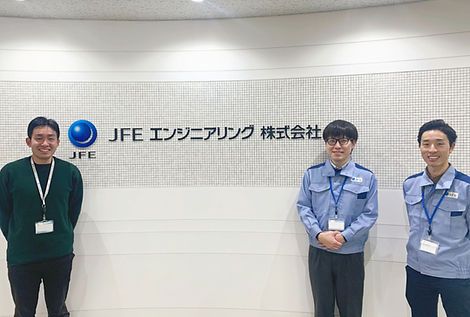 Company interviewsWhat we felt through our project with ElithJFE Engineering Corporation
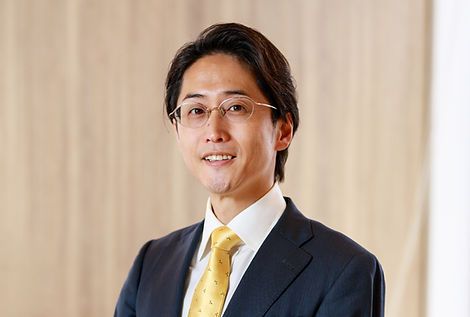 Company interviewsAI-driven efficiency in home-visit nursing — Tackling and solving a complex route-planning problem —Recovery International Co., Ltd.
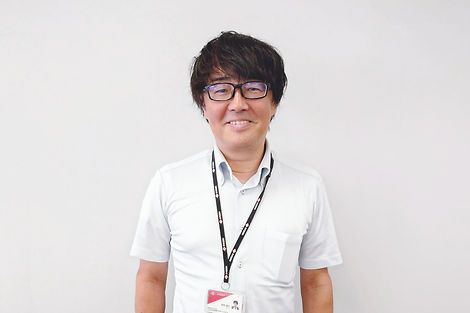 Company interviewsA hands-on training course that accelerates AI agent developmentRYODEN Corporation
Client interview: Harima Chemicals, Inc.
We wanted to end the moment someone says, "We've done that before." Harima Chemicals and Elith worked together on an initiative to connect nearly 80 years of accumulated technical knowledge to the next generation of research. A young researcher works out the experimental conditions and shows them to a veteran colleague. Sometimes, the veteran responds with words like these: "We've done this before." Past reports and experimental data remain within the company. Even so, if they can't be found when needed, that knowledge never carries over to the next round of research. What Harima Chemicals's Research Planning Department faced was this state of information that exists but can't be put to use. Elith worked alongside them for about three months, supporting design and technical decisions. Two members of the Research Planning Department led the development themselves, aiming to build a system they could create and adjust on their own as neede
 ArticleWhat's the difference between C Certification and ISO/IEC 42001? How to choose an AI governance certificationAs AI use spreads, companies are being asked to reach a state where they can explain not just that they "use AI," but that they "manage it responsibly." In Japan, C Certification exists as a certification for building an AI governance system. There's also the international standard ISO/IEC 42001, and quite a few companies find it hard to tell what the difference is or which one to start with. This time, we spoke with Takeshita, who has been involved in building AI governance and management systems, about the difference between C Certification and ISO/IEC 42001, which companies each one suits, and points to watch after certification. To start, I think both C Certification and ISO/IEC 42001 relate to A
 ArticleUsing AI with peace of mind — how C Certification and GENFLUX Security support corporate AI governanceCorporate AI use has already moved past the stage of debating whether to use it at all. AI features are built into more than just generative AI like ChatGPT and Claude — they're now embedded in the SaaS products and work tools people use every day, and the number of moments when employees use AI without even realizing it keeps growing. At the same time, not many companies have a real grasp of which AI is being used, by whom, and how, within their own organization. As convenience takes the lead, there are cases where awareness of risks such as information leaks, misuse, and accountability hasn't caught up. Amid this situation, C Certification is one entry point for building an AI governance system. So why has Elith positioned support for obtaining C Certification as a business, and what possibilities does it see the
 ArticleSo that C Certification isn't just "get it and move on" — what Elith is looking towardObtaining C Certification requires taking stock of AI usage, organizing risks, developing rules, and reviewing internal structures. Even after certification, reviewing AI usage and improving operations continues. That is exactly why this is an area where, if you try to go it alone, it's easy to get lost on questions like "where do we start," "how far do we need to go," and "how do we operate after certification." Elith can provide end-to-end support, from building AI governance before obtaining C Certification, to improving operations afterward, and even implementing AI security using GENFLUX Security. This time, we spoke with Shinomiya, who is involved in supporting C Certification, about how Elith positions "obtaining certification" and what kind of support it envisions beyond that. When it comes to supporting C Certification,
 ArticleHow to build corporate trust in the age of AI — why C Certification is needed nowGeneral-purpose AI like ChatGPT and Claude is one thing, but AI capabilities are now quietly built into the SaaS products and everyday work tools people already use — that's the reality of business in 2026. And it's no longer limited to specialists: it's now common for non-engineers to build their own work tools and automation flows using GitHub Copilot or generative AI. As this convenience grows, new challenges are emerging for companies. It's becoming harder to see the full picture of AI use — not just the AI a company formally adopts, but also the AI employees use on their own judgment, AI features added later to existing tools, and automation flows that have naturally taken hold in day-to-day work. What companies are being asked today isn't whether they use A
 ArticleAI governance C Certification: the 3 phases to certification, explained—timeline, effort, and deliverables'I want to obtain AI governance C Certification, but I can't picture what the process actually looks like, or how much of a burden it will be internally'—this is a common concern among companies considering C Certification. At Elith, we support C Certification in three broad phases. This article explains, from a practical standpoint, what happens in each phase, along with the timeline, deliverables, and the rough workload expected on the client side. Elith, as a certified consulting firm for C Certification, provides support for building AI governance structures and obtaining C Certification. If you're struggling with setting rules and guidelines for using AI in your organization, or with building an internal structure, please feel free to reach out. 'I don't know where to start' or 'I want to sort out
 ArticleWhat are the "three safeguards" behind offense-oriented AI use?While more companies are using AI as an offensive move, there are no shortage of cases where the "defense" that supports it behind the scenes is not sufficiently in place. To use AI safely and connect it to sustainable growth, you need to establish, at the same time, three pillars that cannot function if even one is missing. This article explains the roles of the three safeguards that support AI use — AI Safety (technical safety), AI governance (organizational control), and certification programs (external proof) — along with concrete examples of related initiatives. Why the three safeguards each play a different role The three safeguards all share the same purpose of "using AI safely," yet they approach it at completely different layers. Safeguard Role Target AI
  ArticleWhy IGPI pursued early certification — confirming AI governance from an objective perspective While the adoption of generative AI is spreading rapidly, companies are expected not only to benefit from its convenience but also to accurately grasp the risks and maintain a system for managing them on an ongoing basis. This time, IGPI became an early recipient of C Certification, JDLA's third-party AI governance certification program. In this article, we spoke with Matsuoka and Kii, who led the effort to obtain C Certification, about the background to pursuing certification, the work involved in obtaining it, the effects they expect from certification, and their outlook for the future. Background to pursuing C Certification What prompted you to pursue C Certification, and what was your objective? Matsuoka: Learning about C Certification during an information session on early certification is what prompted us to pursue it. We had already been taking certain measures in-house regarding AI-related risks, but
 ArticleWhat is C Certification? An easy-to-understand comparison with ISO/IEC 42001As AI adoption spreads rapidly, more and more companies are grappling with questions such as "Is our AI use really safe?" and "How should we explain it to our business partners?" As a third-party certification to address these challenges, JDLA (Japan Deep Learning Association) released the "AI Governance C Certification" (hereafter, C Certification) in 2026. Meanwhile, the international standard "ISO/IEC 42001" also exists for AI governance, and many companies are unsure which one to obtain. This article organizes the characteristics and differences between C Certification and ISO/IEC 42001. The comparisons and views in this article are Elith's own, based on its support track record, and do not represent the official
 ArticleWhy Stitch Co., Ltd. pursued C Certification: preventing 'shadow AI' and moving AI adoption forward together with clientsAs AI adoption spreads rapidly, companies are being asked to clarify which AI tools they use, under what rules, and to what extent. This time, Stitch Co., Ltd. worked to obtain C Certification in order to establish internal governance around AI use and strengthen future business growth and client trust. In this article, we spoke with Yohei Hosoya, Representative Director of Stitch Co., Ltd., and Tanaka and Mibu, who led the C Certification project, about their motivation for pursuing certification, the process of obtaining it, their experience working with Elith's support, and their outlook for the future. Background to pursuing C Certification What led you to want to obtain C Certification? Hosoya: Since around the start of this year, I'd been thinking about how we might go about deciding on guidelines
 Article"I didn't know" is no longer an excuse: the management liability risks hidden in Japanese companies' AI useWhile AI use, starting with generative AI, is spreading company-wide, no shortage of companies have failed to grasp "who is managing which AI, and how." However, the risks associated with AI use are becoming an issue directly tied to management liability that "I didn't know" no longer excuses. This article organizes the risks lurking in AI use into two usage patterns and explains what actual harm can result if countermeasures are neglected. Thinking about risk in terms of two usage patterns Corporate AI use can broadly be divided into the following two patterns, each harboring different risks. Pattern 1: Using existing AI tools (SaaS, etc.) This is where employees individually use general-purpose AI tools such as ChatGPT to
 ArticleWhy Kikagaku pursued AI governance certification: delivering peace of mind to clients as 'proof of trust'As generative AI adoption spreads, companies are being asked to put rules in place for using AI safely and appropriately, and to build an ongoing governance structure. Against this backdrop, Kikagaku, Inc. worked to obtain 'C Certification,' a third-party AI governance certification. While the company had already been developing AI usage rules and a management structure internally, as a provider of AI governance support, it felt the need to put its own AI governance back in order. This time, we spoke with Kinoshita, who led the effort to obtain C Certification, about the background to pursuing it, the internal structure, what mattered most during the process, their experience with Elith's support, and their outlook for the future. Background to pursuing C Certification What was the occasion for
Capturing the pulse of the field,
and putting it into record.
We share not just finished conclusions, but the moments questions arise and conversations across different expertise.